Engine Diagnostics in Fort Lauderdale: What You Need to Know
Engine diagnostics in Fort Lauderdale: what to expect when your check engine light comes on
Engine diagnostics is the step‑by‑step process technicians use to read your car’s computer, interpret Diagnostic Trouble Codes (DTCs), and run focused tests to find the actual mechanical or electrical problem. In Fort Lauderdale, a careful diagnostic turns a vague check engine light into a clear repair plan that protects safety, prevents bigger bills, and helps keep fuel economy where it should be. This guide explains how OBD‑II systems and live sensor data point to root causes, lists common reasons the check engine light appears, and outlines what transparent diagnostics typically cost in our area. You’ll also learn how technicians translate OBD‑II codes into practical tests, why some European luxury cars need special tools, and simple steps you can take to prepare your vehicle for an appointment. We’ll note how Southport Auto Repair supports accurate diagnosis with clear communication, warranty‑backed repairs, and easy local scheduling. By the end, you’ll know when to act, what happens during a scan, and how to choose a diagnostic approach that balances thoroughness with cost.
What is engine diagnostics and why it matters in Fort Lauderdale
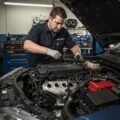
Engine diagnostics means reading a vehicle’s onboard computer and testing systems to find faults that affect drivability, emissions, or safety. Technicians use OBD‑II scanners to pull codes, monitor live sensor data, and run targeted checks so repairs are based on evidence — not guesswork. Good diagnostics prevent needless part swaps, restore fuel economy, and stop small issues from becoming major repairs. In Fort Lauderdale’s heat and stop‑and‑go traffic, prompt diagnostics also help keep emissions within limits and reduce the chance of a roadside breakdown.
To put these systems in context, here’s a short explanation of how they evolved and what they do:
OBD‑II & OBD‑III: what they do and why they matter
OBD (On‑Board Diagnostics) is your vehicle’s built‑in self‑check. OBD‑II monitors many engine and emissions parameters and records faults so technicians can diagnose problems. OBD‑III is a proposed extension intended to shorten the time between fault detection and repair by making emissions information more immediately actionable.
OBD‑II and big data: A powerful combination to solve the issues of automobile care, Meenakshi, 2020
Engine diagnostics gives Fort Lauderdale drivers three clear benefits:
- Faster repairs because the faulty system is isolated and fixes are verified.
- Lower long‑term costs by stopping cascading failures and repeat attempts.
- Improved safety and emissions performance through confirmed repairs.
Understanding how scanners convert sensor signals into codes leads naturally to the next topic: how vehicle computer diagnostics actually identify engine faults and why a code is only the starting point, not the whole answer.
For more articles and maintenance tips, see our auto repair blog.
How vehicle computer diagnostics identify engine issues
OBD‑II systems collect data from many sensors and flag exceptions as Diagnostic Trouble Codes (DTCs). A code points to a system or circuit where readings are outside expected ranges, which helps technicians narrow their testing. Scanners show stored and pending DTCs, freeze‑frame snapshots taken when a fault occurred, and stream live data — fuel trim, oxygen sensor voltage, mass air flow and more — so you can see how the engine behaved in real time. For example, a P0301 code means a misfire on cylinder 1 — but it doesn’t say whether a spark plug, injector, compression issue, or wiring fault caused it. Good technicians correlate codes with live data and run hypothesis‑driven checks (ignition testing, fuel pressure checks, compression tests) to confirm the true cause and avoid unnecessary part replacements.
At its core, the OBD‑II protocol provides real‑time operational data that helps detect faults more precisely.
OBD‑II protocol: live data for better fault detection
The OBD‑II diagnostics protocol reads information through the car’s communication port and supplies real‑time data about vehicle operation. Technicians use this stream to capture engine behavior and improve fault detection accuracy.
Driving behavior analysis and classification by vehicle OBD data using machine learning, 2023
Interpreting codes correctly takes experience and methodical testing — that difference between a simple code read and a full diagnosis is what saves time and money. That’s why you should act promptly when the check engine light comes on.
Why early check engine light diagnosis matters
Diagnosing a check engine light early limits damage and usually keeps repair costs much lower than if a fault is allowed to cause secondary failures. For example, a failing oxygen sensor left unchecked can make the engine run rich or lean, fouling spark plugs and eventually damaging the catalytic converter — turning a small sensor job into an expensive emissions repair. Early detection also preserves fuel economy and keeps daily driving smooth instead of intermittent or unpredictable. From a safety and legal standpoint, timely diagnostics help ensure emissions systems operate within limits and reduce the risk of sudden stalls or power loss.
Acting quickly after a check engine light appears often avoids escalating repairs and shortens downtime, so booking a professional diagnostic is normally the most cost‑effective first step.
Common causes of the check engine light in Fort Lauderdale vehicles
The check engine light covers issues with combustion, emissions control, fuel delivery, or engine electronics. Many causes are common across makes and models (see our vehicle pages), though frequency depends on vehicle age and service history. In Fort Lauderdale, frequent triggers include loose or damaged gas caps, aging oxygen sensors, ignition misfires, mass air flow sensor faults, and catalytic converter problems caused by prolonged neglect. Triage depends on symptoms: a flashing light with poor power is urgent, while a steady light with minor changes can often wait for same‑day diagnostics.
Quick reference — common causes:
- Loose or damaged gas cap: EVAP leak that triggers EVAP codes.
- Oxygen (O2) sensor failure: Affects fuel trim and increases emissions.
- Catalytic converter problems: Often the result of long‑term misfires or sensor failure.
- Mass air flow (MAF) sensor faults: Can cause rough idle or poor acceleration.
- Ignition misfires: Rough running and potential catalytic damage if ignored.
| Component / Symptom | Typical DTC(s) | Common Causes / Severity |
|---|---|---|
| Gas cap / EVAP leak | P0442, P0455 | Loose cap or cracked seal — low immediate severity if fixed quickly |
| Oxygen sensor | P0130–P0167 | Sensor wear or contamination; affects emissions and fuel economy |
| Catalytic converter | P0420 | Often follows prolonged misfires or sensor failure; higher repair cost |
| MAF sensor | P0100–P0104 | Contamination or wiring issues; impacts throttle response |
| Misfire (cylinder‑specific) | P0300–P0312 | Ignition, fuel, or mechanical causes; urgent if light is flashing |
This table helps drivers match codes to systems and see whether an issue is likely to worsen if ignored. That makes symptom reporting to your technician faster and more useful.
Which engine problems trigger the check engine light?
Modern ECUs monitor many parameters and protective thresholds, so a wide range of engine problems can trigger the light: misfires, fuel injection faults, sensors out of range, and emissions system malfunctions are common examples. Misfire codes often stem from worn spark plugs, failing coils, or fuel delivery problems and show up as rough idle or hesitation. Emissions DTCs usually point to oxygen sensor drift, catalytic converter inefficiency, or EVAP leaks; they may not immediately reduce power but can cause failed inspections and higher emissions. Remember: a code flags a system — not necessarily a single failed part — so avoid parts‑only fixes until testing confirms the cause.
If the check engine light is flashing, treat it as an urgent misfire or severe condition that risks catalytic damage. If it’s steady, schedule a thorough diagnostic to prevent escalation and protect long‑term reliability.
How sensor failures affect engine performance
Sensors like the O2, MAF, cam/crank position, and coolant temperature provide the ECU with the inputs it needs to control timing, fuel delivery, and emissions. When those inputs fail or drift, the ECU falls back to default strategies that typically reduce performance and raise fuel use. For example, a failing MAF sensor can produce overly rich or lean mixtures, causing rough acceleration and poor idle; a bad cam or crank sensor can cause stalling or a no‑start by upsetting ignition timing. Diagnosing sensor faults involves checking live data for implausible values, bench testing sensors, and inspecting wiring and connectors. Fixing the sensor or the upstream cause (vacuum leaks, contamination) usually restores normal operation and prevents secondary damage.
Comparing live parameters with expected ranges is essential to distinguish a bad sensor from a related mechanical problem and to target the right repair efficiently.
How much does an engine diagnostic test cost in Fort Lauderdale?
Diagnostic costs in Fort Lauderdale range from a basic scan fee to a more in‑depth diagnostic that includes live‑data analysis and targeted testing. Reputable shops price based on the work required rather than guessing. A basic OBD‑II code read has a lower starting fee; a comprehensive diagnostic — with data logging, pressure checks, and multi‑system tests — costs more because of technician time and equipment. Investing in a quality diagnostic usually saves money compared with paying a low fee for a code read that leaves you returning for follow‑ups or unnecessary parts. The factors below explain what shapes the price.
- Price reflects labor, tools, vehicle complexity, and any extra tests (compression, fuel pressure) needed.
- European cars can take more diagnostic time because of proprietary protocols and module complexity.
- A thorough diagnosis reduces follow‑up visits and uncovers underlying causes that affect repair quotes.
| Service Type | Cost Factor | Typical Range / Impact |
|---|---|---|
| Basic code read | Time required | Lower starting fee; identifies stored codes only |
| Comprehensive diagnostic | Technician labor and data logging | Moderate; confirms root cause and avoids misdiagnosis |
| Vehicle‑specific testing | Specialized tools / complexity | Higher for European makes; can add to labor time |
This table shows how service type and vehicle complexity affect pricing and why a full diagnosis often lowers total repair cost. If you want an estimate for your vehicle, we can provide one after the diagnostic phase.
What factors influence diagnostic pricing?
Diagnostic pricing depends on how long a technician needs to investigate, whether live‑data logging or bench tests are necessary, if module reprogramming or coding is required, and vehicle‑specific complexity such as European protocols. Technician expertise, diagnostic equipment, and labor all factor in because a proper diagnosis is often a multi‑step process of hypothesis and verification. For example, isolating an intermittent misfire might need extended road testing and data capture, while replacing an obvious emissions sensor can be quick. Aftermarket mods, low battery voltage, or intermittent faults also increase diagnostic time and cost.
Knowing these drivers helps owners pick the right diagnostic scope and avoid low‑cost scans that only show codes without resolving root causes, which often leads to repeat visits and higher cumulative expense.
How Southport Auto Repair keeps diagnostic costs transparent
At Southport Auto Repair we focus on clear communication, no‑pressure diagnostics, and written estimates after a confirmed diagnosis so you understand recommended repairs and costs. Our technicians explain retrieved codes, the targeted tests performed, and repair options using OEM or equivalent parts, and we outline warranty coverage where it applies. This transparent approach minimizes surprises and gives you the information needed to compare repair options. As a neighborhood shop, we treat customers like neighbors — straightforward estimates and clear explanations before any repair starts.
| Diagnostic Phase | What Southport Communicates | Customer Value |
|---|---|---|
| Initial scan | Codes, freeze‑frame, and live‑data summary | Clear view of observed faults |
| Targeted testing | Tests performed and results | Confidence in root‑cause identification |
| Estimate & warranty | Repair options, parts quality, and warranty terms | Informed decision‑making and reduced risk |
This table shows how clear reporting at each diagnostic step builds confidence and improves repair outcomes.
What is Southport Auto Repair’s diagnostic process in Fort Lauderdale?
Southport Auto Repair follows a four‑step diagnostic workflow designed to find root causes efficiently and communicate findings clearly. First, we conduct an intake interview to gather symptoms, recent work, and the driving conditions that reproduce the issue. Second, we run a full OBD‑II scan and live‑data logging to capture codes and operational parameters. Third, we perform hypothesis‑driven tests — fuel pressure checks, ignition tests, sensor bench testing — to pinpoint the failing component or system. Finally, we document findings, provide a clear estimate for repair using OEM or equivalent parts, and verify the fix with data logging and a test drive.
- Intake & symptom assessment: Gather context and reproduce the fault when possible.
- Scan & data logging: Retrieve DTCs and capture live parameters under load.
- Targeted testing: Run specific tests to confirm the root cause.
- Report & verify: Provide an estimate and confirm repair effectiveness after completion.
These steps describe our methodical approach and set clear expectations for your diagnostic visit.
How the OBD‑II scanner is used during diagnostics
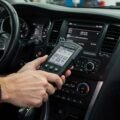
An OBD‑II scanner connects to the vehicle’s ECU to read stored, pending, and historic DTCs and to stream live sensor data; freeze‑frame captures show the conditions when a fault occurred. Technicians compare readings — short‑ and long‑term fuel trim, O2 voltages, and MAF airflow — to expected ranges to spot inconsistencies that point to specific failures. For instance, a P0171 (system too lean) code leads to checks for vacuum leaks, fuel pressure, and MAF readings rather than an automatic parts swap. When codes are unclear, live‑data trends and road testing guide bench or component tests to validate or rule out causes.
We use the scanner as a data‑gathering tool, not an oracle, so repairs target root causes instead of just symptoms.
What technicians do to analyze and resolve engine issues
After pulling codes and live data, technicians form a hypothesis and design targeted tests — ignition primary and secondary checks, fuel pressure measurement, compression tests — to confirm or reject it. They inspect wiring and connectors for intermittent faults, verify sensor outputs against expected values, and replace parts only when tests justify it. After repair, verification includes clearing codes, re‑logging data under the same conditions, and a test drive to ensure the issue is gone. Documenting findings and post‑repair verification gives you proof the problem was found and fixed, lowering the chance of repeat visits.
This cycle — hypothesis, test, repair, verify — reduces wasted parts, shortens downtime, and delivers reliable results.
How European cars are diagnosed differently in Fort Lauderdale
European vehicles like BMW, Audi, and Mercedes‑Benz often use manufacturer‑specific modules and protocols that need deeper diagnostic access, calibration data, and sometimes coding or module programming to complete a repair correctly. Generic OBD‑II scanners can read basic emissions codes, but many European systems store brand‑specific codes and require advanced tools to access body, chassis, and drivetrain modules. European cars also commonly use direct ignition coils, advanced turbo controls, and more complex emissions subsystems that need specialist procedures. Choosing a shop with European experience avoids misdiagnosis and ensures software changes, adaptations, or calibrations are done right.
For luxury vehicles, advanced data analysis — including detailed sensor readings and diagnostic information — is especially important for accurate assessment.
Luxury car diagnostics: why advanced data matters
Research into luxury car data analysis highlights the need to combine sensor readings, driving patterns, and diagnostic information to accurately diagnose high‑end vehicles.
Luxury Car Data Analysis: A Literature Review, P Barakati, 2024
| Brand | Specialized Tool / Procedure | Typical Diagnostic Focus |
|---|---|---|
| BMW | Manufacturer‑level protocol support & module coding | VANOS timing, coil‑on‑plug misfires, adaptation resets |
| Audi | VAG‑specific diagnostics & adaptation procedures | Turbo control, intake flap systems, multi‑module DTC trace |
| Mercedes‑Benz | Mercedes diagnostic protocols & module flashing | Fuel trim adaptation, injector coding, emissions module checks |
This table shows why European diagnostics often require tools and steps beyond a generic scan — which improves accuracy and avoids unnecessary part replacement.
What specialized tools are used for BMW, Audi, and Mercedes diagnostics?
Technicians working on European marques use manufacturer‑level scan tools or OEM‑equivalent software to read extended DTCs, perform module adaptations, and carry out parameter resets that generic scanners can’t do. These tools support injector coding, throttle body adaptation, transmission adaptation, and module programming when replacements require software updates. For example, replacing a camshaft sensor on some models may require a learned adaptation via the manufacturer protocol to restore timing alignment. Using OEM‑equivalent parts and tools preserves coding and calibration, preventing drivability issues that can occur when a module isn’t configured correctly.
If dealer‑level functions are necessary, a qualified independent shop with OEM‑equivalent diagnostics can usually deliver the same result at lower cost without sacrificing correctness.
Why choose experts for European vehicle diagnostics?
Choosing technicians experienced with European diagnostics lowers the risk of misdiagnosis because specialists understand brand‑specific failure modes, software needs, and common wiring or sensor quirks that generic approaches miss. Experts combine knowledge of typical wear with proper adaptation and coding procedures so repairs are complete and durable. For BMW, Audi, or Mercedes owners, specialist diagnosis often saves money by avoiding iterative parts replacement and ensuring module‑level fixes are done correctly. This expertise also helps preserve warranty coverage and long‑term value by using OEM or equivalent parts and documented procedures.
Specialist care delivers better reliability and a lower total cost of ownership for European vehicles compared with a simple scan‑and‑replace approach.
How to schedule a reliable auto diagnostic in Fort Lauderdale
To schedule a reliable diagnostic, start with clear symptom reporting and pick a provider that explains process and costs up front. Tell the shop when the issue occurs, recent repairs, and any dashboard lights. Note the make, model, whether the problem is intermittent or constant, and describe the driving conditions that trigger it. A professional shop will ask targeted questions, allow time for data‑logging or road testing if needed, and explain the expected diagnostic scope and fees. Below is a checklist to help you prepare and a short list of benefits when you book with a trusted local provider.
- Provide a clear symptom timeline and recent maintenance history.
- Note whether the check engine light is steady or flashing and describe what triggers it.
- Make sure the vehicle has fuel and is available for test drives if needed.
Sharing this information speeds diagnosis and reduces time spent on preliminary troubleshooting because technicians can reproduce faults more quickly and focus on likely causes.
Benefits of booking diagnostics at Southport Auto Repair
Southport Auto Repair offers neighborhood service with honest estimates, clear pricing, and European car experience that can reduce repair cost and downtime. We use OEM or equivalent parts, offer a 1‑Year / 12,000‑Mile nationwide warranty on qualifying repairs, and aim for same‑day service for many maintenance and light repairs. Customers receive clear diagnostic reports, estimates before any work begins, and straightforward explanations so they can prioritize repairs without pressure. These practices give Fort Lauderdale drivers a dependable option for accurate diagnostics and follow‑through.
How to prepare your vehicle for a diagnostic appointment
Prepare by making a short symptom timeline, listing recent repairs or parts, and noting when the problem occurs — cold start, idle, highway, or under load. Ensure the vehicle has enough fuel for test drives and is accessible with keys and remotes; allow permission for road testing since many intermittent issues require on‑road replication. Clear engine‑bay access if possible and bring maintenance records or previous diagnostic reports because historical data often shortens the process. Sharing this information before your appointment helps technicians focus tests and usually reduces diagnostic time and cost.
To schedule, Southport Auto Repair accepts phone appointments and welcomes in‑person inquiries; call the shop to discuss symptoms, availability, and what to expect.
| Preparation Step | Why It Matters | Quick Tip |
|---|---|---|
| Symptom timeline | Helps replicate the fault conditions | Note when, where, and how often the issue happens |
| Recent repairs list | Shows possible related work | Bring receipts or part details if available |
| Fuel & accessibility | Enables road testing and longer checks | Keep tank >¼ for extended diagnostics |
This checklist and table summarize how simple preparation speeds diagnosis and improves repair accuracy for Fort Lauderdale drivers.